I know I've been bad about citing. This article is from a blog that I looked at last week. I don't know where I took if from, but it looked interesting. So, I just want to say these words belong to someone else.
Peroneus Longus
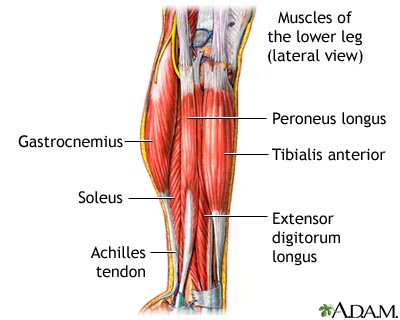
Source: http://www.
And I thought I was special … turns out quite a few of us suffer from tight Peroneus Longus. The PLs are not bothering me very much lately. Stretching helps a lot. I have added a few stretches that really worked for me. It took 2 weeks of going easy on the runs, massage and a lot of stretching to manage this problem. Read on for the some medical stuff and things I tried to work on my pesky PRs.
Let’s get to know this troublesome muscle …
Peroneus Longus is one of the peroneal muscles which pass down the outside of the lower leg and evert (turn out) the foot. These muscles are sometimes referred to as fibularis longus and brevis due to their attchments on the fibula.
The peroneal muscles run down the outside of the lower leg and are often neglected in a stretching routine.
Stretch: Sit in a chair with one ankle resting on the other knee, with your hands, point the foot (plantarflex) and turn the sole of the foot upwards (invert).Hold for between 10 and 30 seconds
Symptoms of Peroneal Tendinopathy:
- Pain and swellilng on the outside of the ankle or heel.
- Pain is worse during activity and gets better with rest.
- Pain when pressing in on the peroneal tendons.
- Pain when the foot is passively inverted (stretching the peroneal muscles) and with resisted eversion.
- Calf muscles may be tight.
Causes of Peroneal Tendinopathy
- Running along slopes causing excessive eversion (rolling out) of the foot.
- Tight calf muscles
- Overuse, particularly in dancers or basketball players.
- Overpronation of the foot or excess eversion of the foot.

No comments:
Post a Comment